
When Princes Preach and Narrators Neglect:


Sir David is back. Another sweeping documentary, another oceanic lament, another reminder that humans are a stain on the natural world — except, of course, for the humans narrating the damage, filming it, and flying across the globe to talk about it.
This time, he’s joined by royal backup. Prince William’s Earthshot Prize is dishing out millions to save the sea, reward innovation, and "repair the planet." But there’s a catch — and it's not seafood. The people who actually harvest from the ocean responsibly, year after year, generation after generation, aren’t just left off the guest list — they’re treated like the problem.
The Script Never Changes
The camera pans. A haunting cello swells. Fish dart through a coral cathedral. Attenborough whispers:
“Here, in the last untouched reef, life clings on — despite us.”
You know the drill. Humans are the villains. Unless they’re sitting in a university lab, attending a climate gala, or narrating the documentary.
The quiet villain of modern environmental storytelling is context. Commercial fishers — the ones who know how to harvest without harming — have been edited out. Instead, sustainability is defined by how far you can get from anyone who earns a living from the sea.
The Earthshot Illusion
Prince William wants innovation. So do we. But what if the innovation is 100 years old, handed down from father to daughter, perfected on a tide chart and tested under real-world constraints?
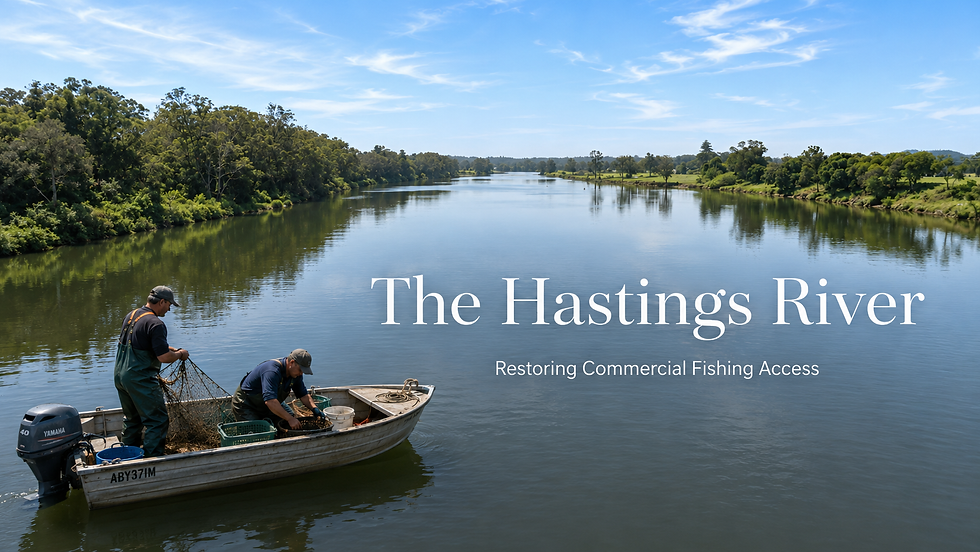
What if the most sustainable seafood system in the world isn’t some yet-to-be-scaled tech startup or kelp-based moonshot, but the humble Australian inshore fisher using low-impact methods, feeding locals, and leaving barely a wake?
These aren’t flashy stories. They don’t come with futuristic animations or corporate backers. They just work. And that’s the problem. Working fishers are hard to monetise and impossible to rebrand.
The Unseen Fisher
The greatest vanishing act of the modern ocean narrative is the disappearance of the small-scale fisher.
They're not extinct — they're excluded. Squeezed by regulations designed by people who’ve never set foot on a deck. Silenced by lobby groups who call any harvest "overfishing." Undermined by supermarkets that demand third-party sustainability stickers slapped on imported seafood, while ignoring local product entirely.
These fishers know their estuaries. They track tides like surgeons track vitals. They self-limit catches. They care for the next season. But they aren’t given a voice — because they don’t fit the script.
When Storytelling Becomes Strategy
It’s one thing to raise awareness. It’s another to set policy. And when documentaries start driving decisions, we’re not governing — we’re storyboarding.
A sweeping drone shot doesn’t explain how catch quotas work. A voiceover about "untouched oceans" doesn’t account for the communities that rely on seafood for both income and nutrition. And a royal prize doesn’t replace a functioning domestic fishing fleet.
When narrative trumps nuance, we get grand gestures with no grip on reality. And the public ends up fed a story, while their actual seafood is shipped in frozen from overseas.
A Modest Proposal for Sir David and The Prince
Before you close another fishing ground, hand out another prize, or narrate another tragedy, take a week off.
Spend it on a prawn trawler in NSW. No camera crew. No publicist. Just the diesel throb of a working engine, the salt sting on your face, and the realisation that the people you’ve been trained to fear — the fishers — are actually some of the last true stewards of the ocean.
The Real Inconvenient Truth
Australia is at risk of losing its seafood sovereignty. Not because of overfishing — but because of overregulation, imported narratives, and romanticised ideas about “untouched” nature that ignore the role of responsible harvesters.
If we keep sidelining the working ocean, we’ll end up with a pristine coastline, a glut of seafood imports, and no one left who remembers how to live with — not just on top of — the sea.
So Sir David, Your Royal Highness — next time you talk about saving the ocean, try listening to someone who depends on it.
They might not have a knighthood or a Netflix deal. But they’ve got skin in the game, scales in the bin, and sustainability in their blood.


I've never been able to understand how the word Sustainability ever gets a mention with regards Australia's primary Producers . Farmers , Fishermen , Foresters . Our Nonexistant miners and oil explorers . All that Australia has left that produces anything is our Primary Producers and they have been demonized almost to extinction . and nobody can see the writing on the wall . Australia , For the first time in almost 200 years is vulnerable to Famine . A famine that has already begun in the shops with prices spiralling beyond the reach of most Australians . The promise of top prices overseas has Primary Producers exporting the Lion's Share of everything and our hyperentitled , overpaid government imports…