
The Unseen Currents: Part Six

The Long-Term Consequences of ITQs.
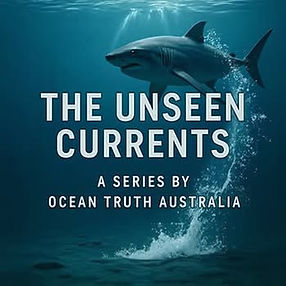
When Individual Transferable Quotas (ITQs) were first introduced, they were sold as a fix to overfishing; a way to protect stocks, bring order to chaos, and make fishing more efficient. But decades later, the tide has turned. Beneath the surface of economic “efficiency” lies a quieter transformation: coastal towns hollowed out, working fishers turned into renters of their own livelihoods, and ecosystems reshaped by policies that changed who could fish and who couldn’t. The Unseen Currents explores how the ITQ experiment, from abalone and lobster to the fisheries of tomorrow, has rippled through Australia and the world, exposing the gap between what was seen, and what was never meant to be.
PART SIX
The Ecological Irony: When Conservation Tips the Balance
Every policy creates ripples. When Individual Transferable Quotas (ITQs) and strict catch limits were introduced, they were meant to heal the ocean, to give fish stocks room to recover and ecosystems time to rebalance. In many ways, they did. But decades later, the results are more complex. While some species have thrived under protection, others have declined, and the balance of marine ecosystems has shifted in unexpected ways.
What began as a human story of exclusion has now become an ecological one. By managing fish as financial assets and restricting commercial take, we have changed not only the industry but the food web itself.
Predator Protection and Unintended Consequences
Efforts to limit fishing on high-value predators such as sharks, tuna and large reef species were designed to rebuild their populations. Combined with marine park restrictions and declining commercial effort, many top predators have indeed rebounded. But these gains have not come without cost.
Across the Australian coastline, fishers and divers have reported rising numbers of large sharks both inshore and offshore, along with a noticeable decline in smaller prey fish such as bream, whiting and flathead. Similar trends are recorded globally. In parts of New Zealand and the United States, increases in apex predator populations have coincided with reduced abundance of mid-level species. In the North Atlantic, heavy protection of seal and shark populations has disrupted food chains that were once regulated by balanced predation and harvest.
The result is ecological irony. Policies designed to protect the ocean’s most vulnerable species may have over-corrected, tipping the balance toward predators that now dominate once-stable ecosystems.
Australia’s Changing Coastline
On Australia’s east coast, shark encounters have become increasingly common. Fisheries restrictions on species such as mulloway and snapper have reduced the availability of mid-level prey, while declining commercial activity in nearshore waters has allowed predatory species to expand unchecked.
In New South Wales, fishers operating in estuaries and coastal zones report more frequent shark interactions, higher gear losses and altered behaviour in target species. Recreational swimmers and surfers are noticing it too, with more shark sightings, more warnings and a greater sense of risk.
While these patterns are complex and driven by multiple factors, the link between reduced commercial harvest and rising predator populations is difficult to ignore. In protecting part of the ecosystem, we may have destabilised the rest.
The Feedback Loop of Policy
Ecological imbalance feeds back into policy itself. As predator numbers increase and prey decline, managers impose further restrictions to protect stressed species, often tightening limits on the very fishers who once helped maintain equilibrium through targeted harvest.
This cycle reinforces itself. Fewer working boats means less ecological interaction, less data from the water and more reliance on models. Policy becomes reactive rather than adaptive. The feedback that once came from lived experience, from fishers who noticed when patterns changed, is replaced by assumptions. The system begins to manage itself through reports rather than relationships.
Lessons from Abroad
Globally, similar patterns have emerged wherever top-down conservation efforts have outpaced local knowledge. In the United States, a combination of ITQs and marine sanctuaries along the west coast has seen seal and sea lion populations rise sharply, altering prey dynamics for species such as salmon. In Iceland, restrictions on groundfish harvest have correlated with an increase in cod predation on smaller species, complicating recovery goals.
The lesson is not that protection is wrong, but that it cannot exist in isolation. When harvest systems are dismantled faster than ecosystems can adjust, imbalances emerge that are difficult to reverse. Conservation without participation risks becoming control without understanding.
Rebalancing the Conversation
The goal of conservation has always been balance, yet balance requires interaction. Commercial fishers were once part of that balance, selective harvesters whose activity shaped local ecosystems over generations. Removing them has not removed pressure; it has only shifted where that pressure falls.
A healthy ocean is not one without fishing, but one where human activity is guided by knowledge and accountability. The challenge now is to find a model that restores both. If ITQs revealed the economic limits of ownership, the modern conservation era reveals the ecological limits of exclusion.
Looking Forward
As debate grows over how to manage coastal species such as snapper and mulloway, Australia faces a new test of what has and has not worked. Calls to extend ITQs into these fisheries promise order and accountability, but the lessons of abalone and lobster remain fresh.
In the next article, we turn our focus to these coastal icons, species that carry both economic and cultural significance, and ask whether another wave of market-based management could repeat the same mistakes, only closer to shore.
Next: “Snapper and Mulloway: Australia’s Next Quota Frontier.”
If you are enjoying these articles, please share on social media, remember to like our Facebook page here and if you join the website, you will receive an email every time a new post is published.
Thank you for taking the time to read.


Comments