
The Price of Freshness: Why Local Seafood Costs So Much

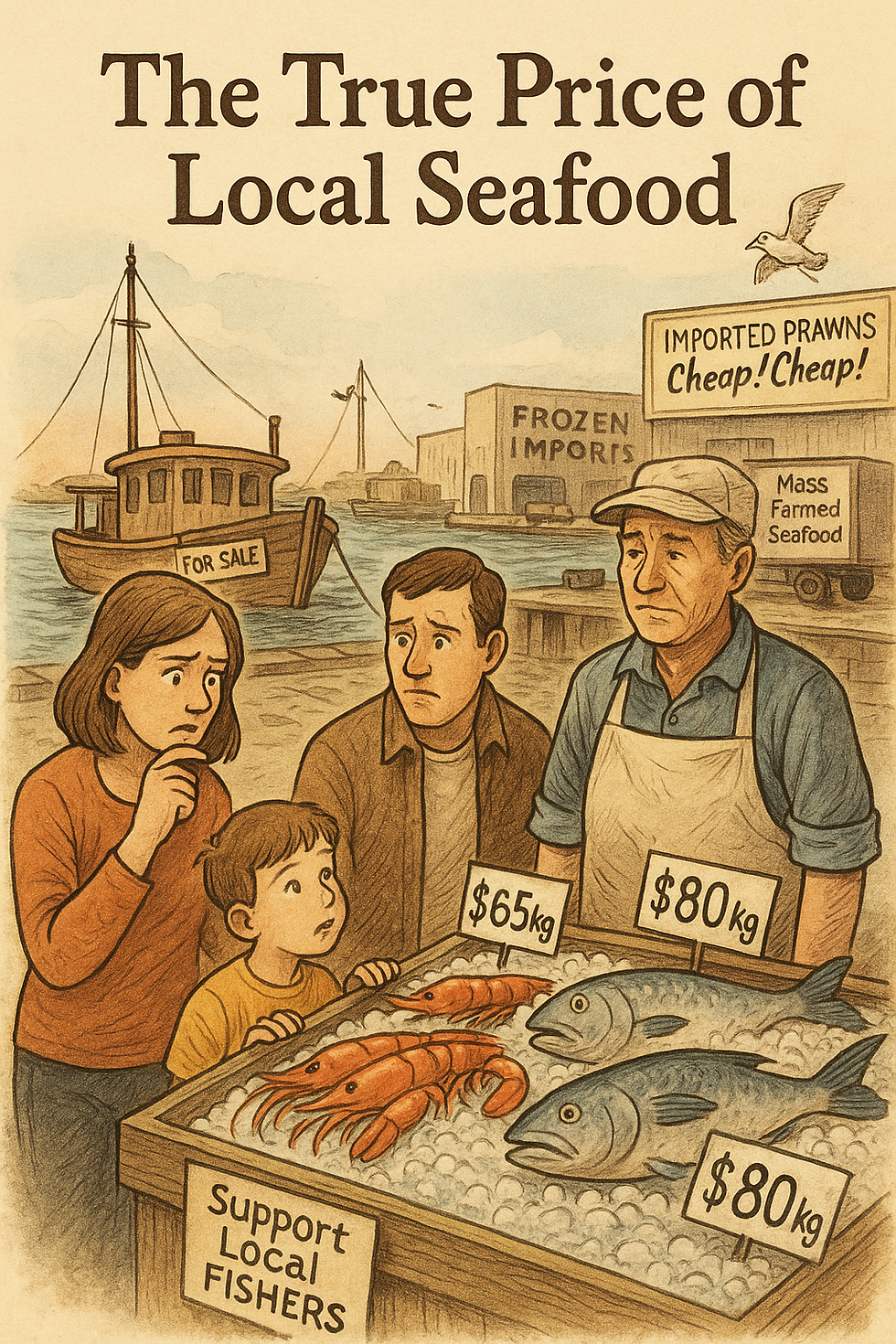
For many Australians, fresh, locally caught seafood is a source of pride—until they see the price tag. Why does something caught just off our shores cost so much more than imported alternatives?
The answer goes beyond simple supply and demand. It’s a mix of government policy, industry consolidation, and a shrinking workforce that’s making local seafood harder to find and more expensive to buy.
Inflation and Government Policy: The Hidden Price Driver
Seafood prices, like everything else, follow the laws of supply and demand. But in Australia, the Reserve Bank of Australia’s (RBA) policy of targeting 2-3% inflation ensures a constant increase in money supply, driving up demand and, ultimately, prices.
Then came COVID-19. The government injected billions into the economy while businesses were shut down, fuelling inflation well beyond the RBA’s target. The result? Everything—from fuel to wages to seafood—became more expensive.
Fewer Fishers, Less Seafood, Higher Prices
For years, NSW has operated under a limited entry fishery model, restricting the number of commercial fishers. This was meant to protect fish stocks, but the unintended consequence has been a drastic decline in local seafood supply.
Instead of growing the industry, government policy has forced fishers to buy out competitors just to survive, reducing the number of operators and concentrating supply into fewer hands.
With fewer boats in the water but demand staying strong, prices have only one direction to go—up.
Government’s Focus: Investment Over Affordability
The NSW Department of Primary Industries (DPI) claims its goal is to “improve investment confidence and grow the industry’s value” (NSW Sustainable Commercial Fishing Strategy 2022-25).
At first glance, this sounds positive—until you realise that “growth” doesn’t mean more fishers, more jobs, or more seafood on local plates.
When I asked Sean Sloan, former Deputy Director General of Fisheries, what "industry growth" means to DPI, his answer wasn’t about increasing local seafood availability. Instead, he focused on raising the value of fish prices and business valuations—a response later echoed by a DPI compliance officer.
At its core, this approach is about business viability, not consumer affordability. The government sees fewer, larger operators as more financially stable and easier to regulate, but this comes at the cost of independent fishers, market competition, and ultimately, local seafood supply.
So, the real question is:
What happens to everyday Australians who now have to pay those higher prices?
Government policy is shifting away from small, family-run fishing operations and toward an investment-driven industry where consolidation and higher market values take priority over affordability and local supply.
The Next Crisis: Who Will Catch Our Seafood?
Beyond rising prices, a bigger issue is looming—the ageing NSW commercial fishing fleet is heading toward retirement with no clear plan for renewal.
With fewer young fishers entering the industry and no structured pathway for replacing retiring operators, the future is uncertain.
Right now, we’re paying record-high prices for local seafood—but in a decade, the real concern will be:
What happens when there’s no local seafood available at all?
If current trends continue, Australians will be left with imported, mass-farmed alternatives, and fresh, locally caught seafood will become a premium export product, not an everyday choice.
Final Thoughts: The Cost of Losing Local Seafood
The high price of local seafood isn’t just about fuel, wages, or inflation—it’s about a system that is driving small operators out, reducing supply, and pushing up prices.
If we don’t change course, we risk turning a proud, sustainable local industry into a commodity controlled by a handful of investors—at the expense of both fishers and consumers.
So, the next time you see the price of fresh local seafood, ask yourself:
Are we paying for freshness, or are we paying the cost of an industry being taken out of our hands?
But rising prices don't mean fishers are winning. In fact, many are earning less than ever. In next Mondays article, we’ll explore why the system is broken for everyone except a select few.
_________________________________________________________________________________
If you are enjoying these articles, please share on social media, remember to follow our Facebook page here and if you join the website, you will receive an email every time a new post is published.
Thank you for taking the time to read.


Comments