
Net Loss: How Global Regulations are Sinking Australian Fisheries


Australia’s fisheries policy, increasingly dominated by directives from the United Nations (UN) and global governing bodies, has quietly stripped away national sovereignty over our ocean resources. Once proudly independent, Australia's fisheries management is now tightly bound to international mandates from unelected bureaucracies.
Global Rules and Local Realities
At the heart of this shift is the Fisheries Management Act 1991, which directly incorporates international obligations such as the United Nations Convention on the Law of the Sea (UNCLOS) and the Food and Agriculture Organisation’s (FAO) guidelines. Though these global initiatives promise sustainability and marine conservation, they often neglect the local realities faced by Australian fishers and coastal communities.
High Cost for Consumers
This loss of sovereignty has come at a high price for Australian consumers. With strict quotas, fishing gear limitations, and stringent sustainability standards, local seafood prices have skyrocketed, while supply dwindles. The Australian fishing industry has drastically shrunk under these restrictive international policies, forcing consumers to increasingly rely on imported seafood from countries with far less rigorous environmental oversight.
Developing Nations Reap Rewards
Ironically, while Australian fisheries buckle under these severe restrictions, developing nations with minimal regulatory compliance are reaping substantial economic benefits. Australian seafood markets have been flooded with imported products from countries that frequently ignore sustainability practices, indirectly supporting environmentally harmful fishing methods abroad.
Struggling Industry and Communities
The Australian fishing industry, once thriving, is now struggling to survive. Employment is falling, coastal economies are suffering, and skilled Australian fishermen are abandoning their trade. This scenario starkly contrasts with the boom experienced by fisheries in less-regulated regions, highlighting the inequitable outcomes driven by global fisheries governance.
Sovereignty at Stake
Ultimately, the implementation of UN-driven fisheries policy in Australia has unintentionally undermined national autonomy, economic stability, and true environmental stewardship. As Australia continues down this path, it's essential to question who truly benefits from such global mandates and to reconsider the value of maintaining our fisheries’ sovereignty.
Risks of Non-Compliance
It is recognised that while Australia has the sovereign choice to implement or reject UN fisheries policies, choosing not to comply could have significant consequences. Potential repercussions include economic sanctions, restricted access to international markets, reputational damage impacting exports and tourism, and potential exclusion from international fisheries management forums. Non-compliance might also expose Australia's marine resources to greater exploitation by foreign entities operating outside internationally recognised guidelines, potentially leading to environmental degradation and depletion of valuable fish stocks.
So, as a country we are left with two choices, implement the UN radical agenda and avoid consequences or don't and suffer.
That leaves just one question. Are we truly a sovereign nation as perceived?
_________________________________________________________________________________
If you are enjoying these articles, please share on social media, remember to follow our Facebook page here and if you join the website, you will receive an email every time a new post is published.
Thank you for taking the time to read.

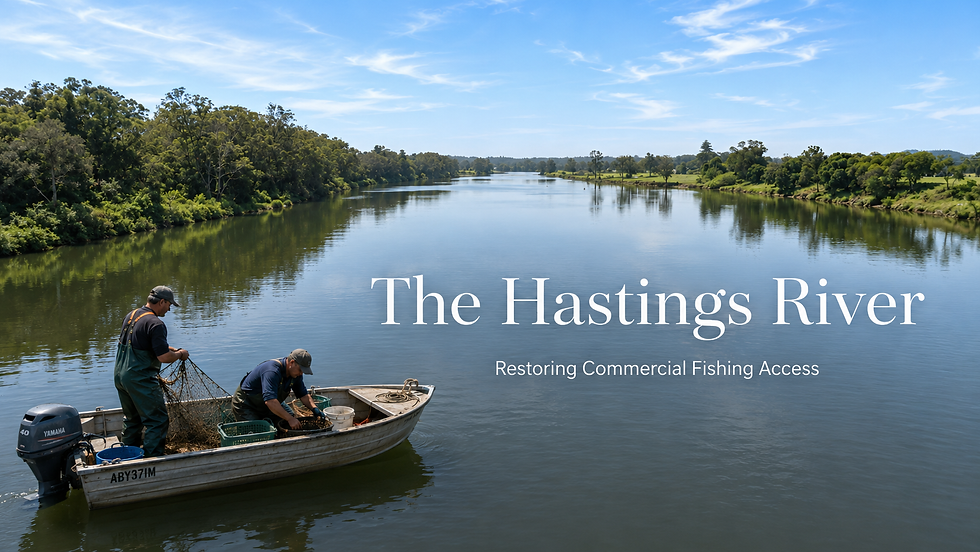

It is essential that our Australian consumers understand the environmental requirements that are set for Fisheries in this Country. Similarly, what the standards are for Fisheries and exporters. Australia is a world leader in its Fisheries Management and this standard goes back several decades - Today you would think that there were no standards. Governments continuing to remove fisheries and nets that have been declared sustainable)
A further layer of external 'supposed Not for Profit' certifications that assume the tick of approval, funded by government (such as MSC) does not pass the pub test as third party (at arm's length) when the strategy is simply giving the existing regulatory standards under Australian legislation a tick. Sitting on advisory committees …