
Hook, Line and Misdirection: The Real Story Behind the 'Missing' Fish


“The pros took all the fish!”
It’s the go-to line — shouted from boat ramps, muttered over beers, and plastered across social media comment sections.
But it’s time to ask a serious question:
How can commercial fishers be stealing all the fish… when there’s barely any of them left?
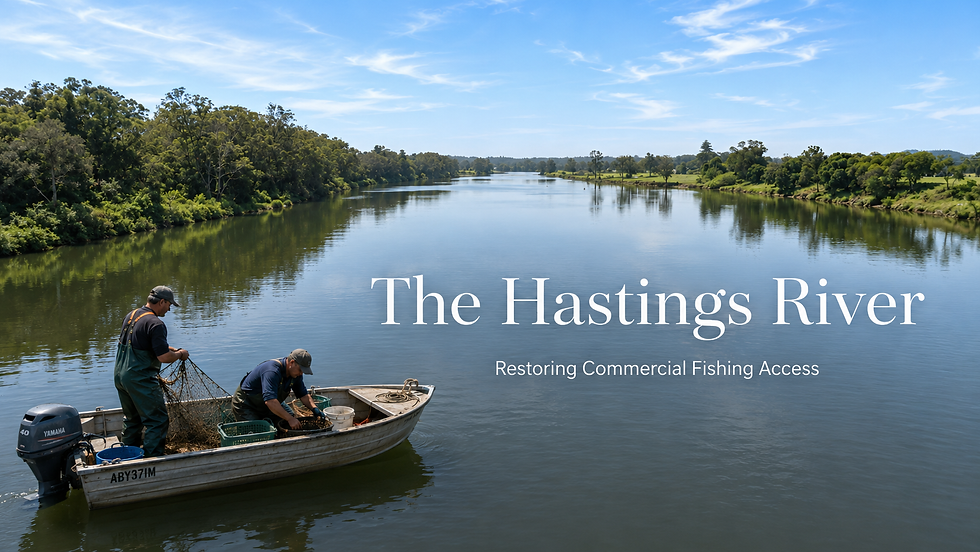
Commercial Fishers Didn’t Disappear — They Were Pushed Out
Over the past two decades, the commercial fishing fleet in NSW and across Australia has been methodically dismantled.
Thousands of fishing businesses wiped out.
Access bought back.
Gear restricted.
Quotas tightened.
Marine parks expanded.
Estuaries that once supported strong local fishing industries now have one or two commercial boats left — or none at all. In some cases, entire fisheries have been reduced to token operators, more symbolic than sustainable.
And yet, the finger still points at the commercial sector. Still blamed. Still scapegoated. Still held responsible for problems they no longer have the scale to cause.
If Commercial Fishers Were the Problem, The Missing Fish Should Be Back — Right?
Let’s apply some common sense.
If the removal of commercial fishers was the solution, fish stocks should have exploded. They didn’t.
In fact, the loudest complaints about “no fish” are still coming — even after the majority of the fleet has been shut down.
So, what’s really going on?
The truth is: in many places, the missing fish are still there. Commercial fishers — where they're still allowed to operate — are bringing in consistent catches. Staples like bream, flathead, mullet, prawns, and even Mulloway still hit decks daily.
But instead of listening to the people on the water, fisheries managers rely on narrow studies, flawed models, and politically convenient narratives. Mulloway is a prime example — labelled overfished yet caught daily in good numbers by commercial operators and recreational fishers who know these fish better than anyone.
The issue isn’t biological. It’s political.
The Irony is Almost Too Much to Bear
Recreational fishers film commercial hauls on their phones and post angry comments online:
“This is why I can’t catch anything!”
While standing metres away from a boat unloading hundreds of kilos of fresh, legal, regulated Australian seafood for the public.
The fish are clearly there. You’re looking at them.
This isn’t a question of scarcity. It’s a question of ownership. Who’s allowed to catch them — and who’s being held accountable when they do?
The Secret Catch Nobody’s Talking About
Commercial fishers are monitored to the decimal. Every kilo logged. Every haul traced. Every trip overseen.
But the recreational sector?
No daily catch reports.
No real-time monitoring.
No meaningful oversight.
Just a vague estimate, based on a once-in-a-blue-moon survey and a whole lot of guesswork.
Meanwhile, a thriving black market operates in plain sight. Snapper, flathead, prawns, Mulloway — caught recreationally, sold illegally. Out of eskies. Off the back of utes. Through local Facebook groups. No licence. No tax. No responsibility.
And somehow, this is never the focus of the “fish are gone” debate.
Stop Blaming Ghosts — They’re Not the Ones Catching Fish
Blaming commercial fishers has become a knee-jerk reaction. It’s easy. It’s lazy. And it’s outdated.
You can’t blame the people feeding the nation when most of them have already been locked out, bought out, or priced out. There’s barely enough of them left to fill a co-op roster — let alone wipe out an entire fishery.
Meanwhile, recreational pressure keeps climbing. Catch records don’t exist. And illegal sales? Swept under the rug.
The truth is simple: Commercial fishers are operating under the tightest rules in the world. Recreational fishers? Many operate with zero accountability.
Blaming commercial fishers today is like blaming your ex for the dishes piling up — they don’t even live here anymore.
So Let’s Ask the Real Question…
Who should be trusted with Australia’s fish?
A licensed commercial fisher — audited, regulated, and feeding the community?
Or someone flogging fillets out of an esky for fifty bucks cash on the side?
The fish are still there. The fleet is not.
So, before the next finger gets pointed…
Are the fish really gone, if so who is really to blame?


Publishing what is caught legally in a commercial fisher's net and using it to denigrate the fisher and or the industry is libel. (Law: 1 published false statement that is damaging to a person's reputation; a written defamation.) The government and its Ministers similarly need to be reminded. Are they deemed as law makers to be above the law as they continue to lay blame on NSW commercial fisheries, continue to develop regulation to foster some shareholders over and above others as they create processes that take away a fishers capacity to be a multi endorsed fisher who should have a choice as to what species he targets with the season and is now penalized if he doesn't target a…